
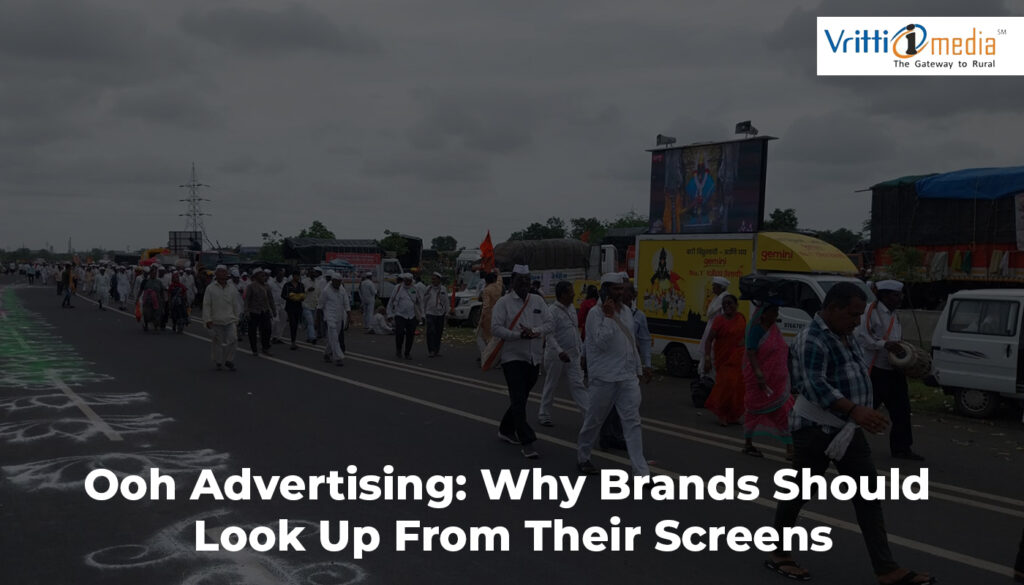
Online ads follow us everywhere. They chase us on social media and in email. But advertising outside the home is different — it feels real and powerful. This is Out-of-Home (OOH) advertising. It skips algorithms and screen fatigue. OOH connects brands with people in the physical world.
Vritti iMedia understands this method well. They focus on local areas and transit stops. They innovate with digital screens and sound. For Vritti, OOH Advertising means more than just being visible — it helps brands build relevance and reach. It helps them resonate with people.
What Is OOH Advertising?
OOH refers to any ad you see away from your house. Think of large signs on highways. Consider posters at bus stops. Ads wrapped on moving autos count too. Digital displays in malls are also OOH. Experiential setups in public squares fit the definition as well.
OOH stands out because it requires no opting in. Users do not need to be online. It is always present. OOH quietly plants brand messages into daily life. It reaches commuters walking to the bus stop. It reaches families going to the market. Travelers navigating transit hubs see it too.
Why OOH Still Works
Massive Reach for All Audiences
OOH is perfect for reaching huge groups of people. It reaches city folks and rural travelers alike. It connects with young adults and older people. These ads are public, so they reach people who avoid digital ads or are hard to target online.
Constant Exposure and High Visibility
Outdoor ads are not fleeting. They are not like banner ads that disappear in seconds. OOH ads stay in a public place for days, weeks, or even months. Repeated viewing builds brand trust and familiarity.
Local Focus and Context
OOH makes targeting specific locations simple. This works for a city bus stop or a rural highway. Ads can be tailored to local culture. They can be translated into regional languages. This local relevance helps the message feel personal and relatable.
It Boosts Digital Marketing
OOH does not replace online ads — it strengthens them. People often see the brand outdoors first and then encounter it online later. This combined effect improves memory, recognition, and trust in the brand.
New Formats: Screens and Sound
The OOH world is changing fast. Digital OOH (DOOH) uses LED screens and videos. This allows brands to update creatives quickly. Adding sound elements enhances impact. Jingles and announcements at transit stops grab attention. This multi-sensory approach works well even in busy places.
Vritti iMedia: Reaching the Real Bharat
Vritti iMedia bridges a key marketing gap. They connect modern advertising methods with India’s rural and semi-urban markets — areas often underserved by traditional media.
Their flagship medium is the Audiowala Bus Stand, which spans over 575 bus stops across 8 states. Brands can reach big cities, small towns, and villages all at once.
Vritti combines sound, digital screens, and transit spaces to create high-impact campaigns. The waiting area becomes a powerful touchpoint. Passengers both see and hear brand messages, ensuring higher recall. Ads are customized for each region using local languages and cultural elements. This local touch connects deeply with rural audiences.
Digital OOH Advertising also provides clear metrics. Real-time updates allow better campaign tracking. Vritti crafts campaigns that meet people exactly where they are.
When OOH Makes the Most Sense
OOH is best for:
- Brand awareness and recall
- Launching a new product or reinforcing brand identity
- Mass reach across large geographic areas, especially tier-2, tier-3, and rural markets
- Driving offline actions, such as store visits and local promotions
- Supporting online campaigns, increasing visibility and strengthening conversions
- Campaigns that need big visual or audio impact, especially in transit hubs
When OOH Might Not Be Ideal
OOH may not work well when:
- You need very detailed personal targeting — digital ads offer better precision.
- The message is complex or requires explanation — OOH messaging must stay short and clear.
- Your product is niche or online-only — digital channels may offer better ROI.
OOH in 2025: A Classic Medium With New Tricks
Digital advertising is bigger than ever, yet OOH is experiencing a major rebirth. Innovators like Vritti iMedia are driving this change. They blend traditional formats with technology, local insight, and audio storytelling. OOH is moving beyond static billboards and becoming a vibrant, high-impact medium.
This transformation is especially visible in small towns and rural areas. Strong visuals, relatable audio, and strategic placement make OOH invaluable. It builds trust and loyalty — not just awareness. Brands targeting India’s diverse consumer base need OOH as part of their strategy.
Final Thoughts: Look Around You
We live in a world dominated by screens and quick clicks. But OOH is the medium that stays visible — persistent and impactful.
OOH works for startups building brand recall, retail brands targeting smaller cities, and established brands looking to amplify reach. Experts like Vritti iMedia deliver measurable, high-impact results.
So next time you wait at a bus stop, look up. That screen or jingle is working hard. Marketing doesn’t always happen online. Sometimes, it happens right where people are.
Contact us today or call us 18001038489